Pests don't wait. Protect your home today.
Stinging Insects in South Florida
Paper wasps, yellowjackets, mud daubers and carpenter bees: how to read the nest and when to keep your distance.
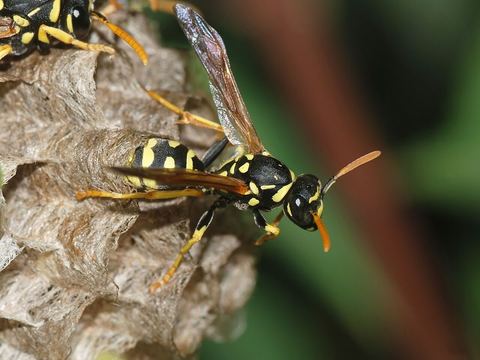
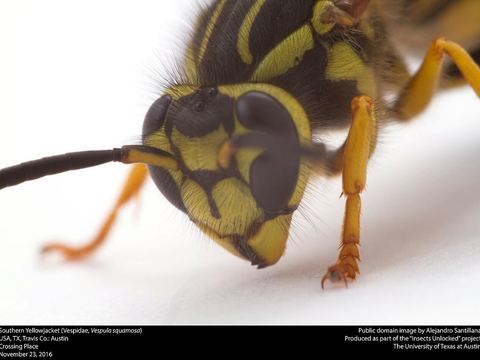
$50 OFF your first service + FREE inspectionNew customers · No code needed · No expirationWasps build nests under eaves, inside hurricane shutters, on pool cage frames and in the ground. Knowing which one you have tells you how risky the nest is. An open paper nest under the eaves is a paper wasp. A steady stream of wasps going in and out of a hole in the ground or a wall means yellowjackets, the ones to take most seriously. Until we get there, keep your distance and don't knock a nest down yourself. Call or text anytime: 833-845-9284.
- Stings
- Allergens
- Stings
- Allergens
- Stings
- Property damage
Shutters, ground nests and wood holes
Hurricane shutters are a South Florida favorite for paper wasps: the top track and locking bar of an accordion shutter, the box above a roll-down and the gaps between stored panels. Rolling a shutter down on a nest is a common way to get stung, so check at the start of hurricane season and again before you close up for a storm; see wasps in hurricane shutters. Yellowjacket nests are usually underground, often in an old rodent burrow, or inside a wall void. Mowers, edgers and foot traffic set them off, and they can sting more than once. Don't plug or seal the hole, because the wasps will look for another way out, sometimes into the house; read don't plug a yellowjacket nest hole and mark the spot instead. Carpenter bees don't eat wood. Females chew a round entrance hole about the size of a finger in unpainted or weathered fascia, decks, fences and pergolas; see carpenter bee holes in a pergola. Most "hornets" here turn out to be yellowjackets or paper wasps.
Which one is it?
| Insect | Size | Color | Where it's found | Key sign |
|---|---|---|---|---|
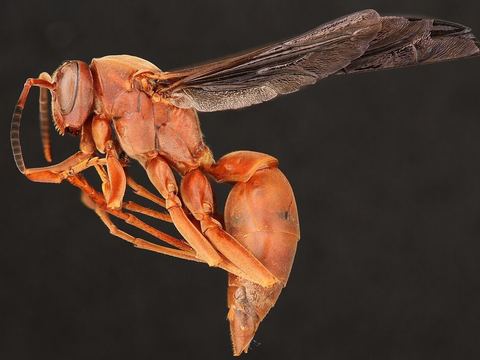
| Paper wasp | About 3/4 to 1 inch | Reddish-brown, black, or brown with yellow | Eaves, soffits, shutters, pool cage frames, mailboxes | Open, umbrella-shaped paper nest |
| Yellowjacket | About 1/2 to 5/8 inch | Bright yellow and black bands | Underground or inside wall voids | Steady stream of wasps in and out of one hole |
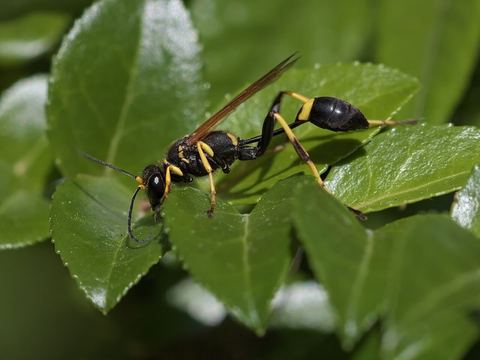
| Mud dauber | About 1/2 to 1 inch | Black, black-and-yellow or metallic blue | Walls, garages, sheds, under overhangs | Tube-shaped mud nests |
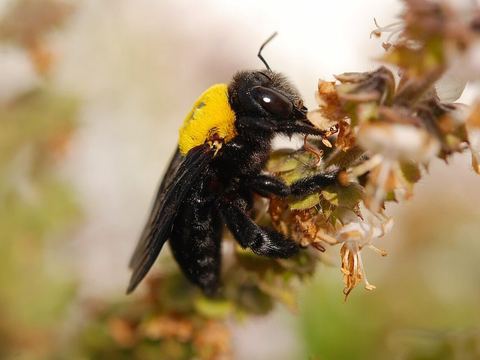
| Carpenter bee | About 1/2 to 1 inch | Shiny black abdomen, some with a fuzzy yellow thorax | Fascia, eaves, decks, pergolas, fences | Round, finger-sized holes in wood |
What we do and when to call
We remove paper wasp, yellowjacket and mud dauber nests, and for carpenter bees we treat the galleries in the wood and plug the holes. We don't remove honey bees. A honey bee colony should be relocated by a beekeeper; our post on wasp or honey bee: who to call helps you tell them apart. Book wasp nest removal.
También conocidas como: avispas, avispones
New customer offer
$50 OFF your first service
+ FREE inspection
Then stay protected with our $125 quarterly pest control plan, about $42/month.
New customers only. No code needed and no expiration. Mention this offer when you call or text.
Frequently Asked Questions
Do we have hornets in South Florida?
Should I seal the hole a yellowjacket nest is in?
Do you remove honey bees?
Seeing pests? Get your FREE inspection.
Get $50 OFF your first pest service and a FREE inspection & estimate. Ongoing protection is $125 quarterly (about $42/month), with no long-term contracts and no cancellation fees.
Prefer to text or email? Text us · info@prospraypest.com