Pests don't wait. Protect your home today.
Yellowjacket Hole in the Ground or a Wall? Don't Plug It
Family-run, licensed and insured pest control in South Florida.
$50 OFF your first service + FREE inspectionNew customers · No code needed · No expirationIf you've found a yellowjacket hole in the yard or a gap in the wall with wasps streaming in and out, don't plug it, cover it or stuff it with anything. It's the fix that feels obvious, and it's one of the worst. Block a ground entrance and the colony can dig a new way out. Block one in a wall and the yellowjackets can find their way into the house instead, through an outlet, a vent or a light fixture. Keep people and pets away, mark where the entrance is, and have the nest treated at the entrance.
Should I plug a yellowjacket hole?
No. Here's what tends to happen when people do.
In the ground. Yellowjackets usually nest in an old rodent burrow or a hollow under roots, and the hole you see is just the front door. The nest below can be much bigger than you'd guess. Throw a rock or a shovelful of dirt on it, and the colony inside doesn't die. It digs. A new exit can open up a foot away, or right next to the old one, and the workers who were out foraging come home to a blocked door and get defensive.
In a wall. This one is worse. A colony sealed into a wall void doesn't just give up. The yellowjackets look for another way out, and the easiest one may be toward the inside of the house. People have them turn up at an outlet cover, a recessed light, a ceiling vent or a gap behind the baseboard. Now the problem is in the living room.
The same goes for the other home remedies you'll read about: gasoline, boiling water, fire or flooding the hole. They're dangerous, and they can drive the wasps into the home.
First, is it yellowjackets?
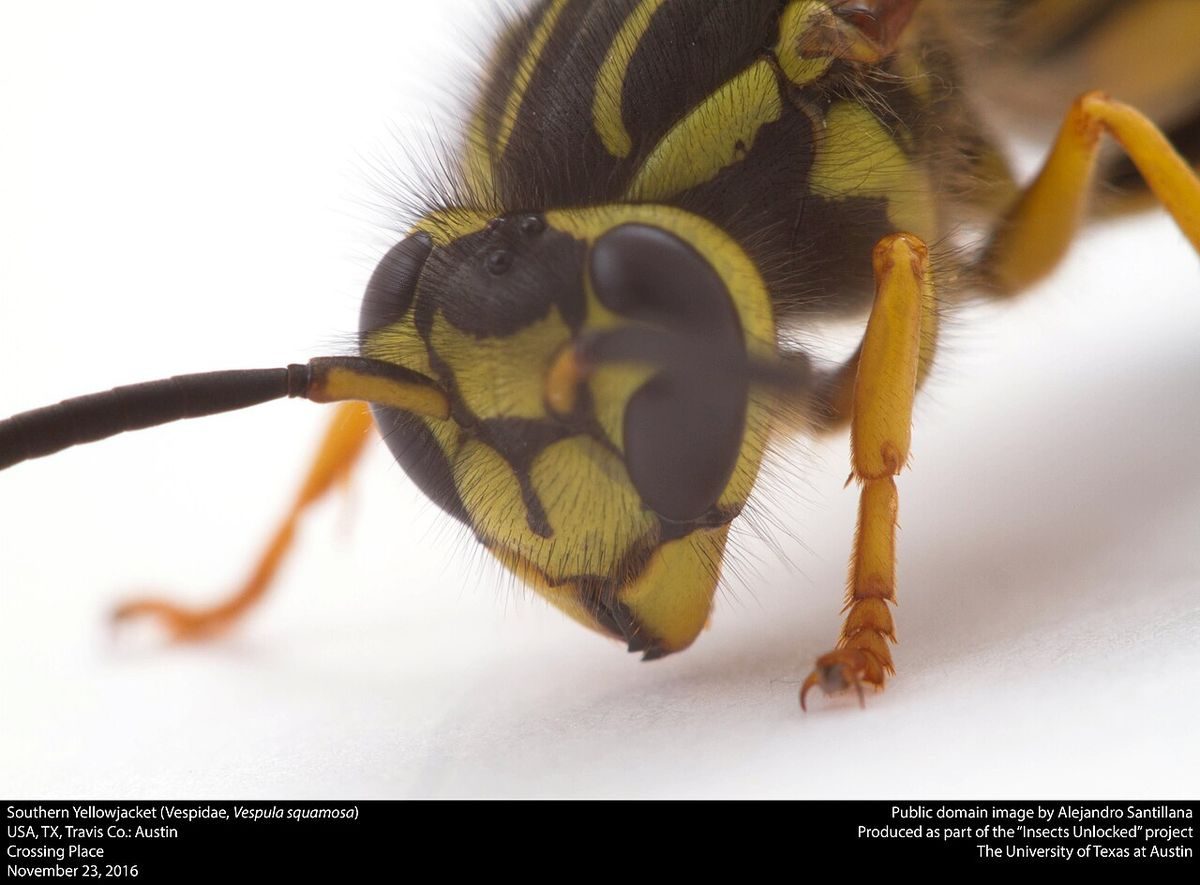
The giveaway is steady traffic. Yellowjackets fly in and out of one opening all day, fast and in a straight line. They're black and yellow, smaller and more compact than paper wasps, and they don't dangle their legs when they fly. Our yellowjacket page has photos, and the stinging insects hub covers the look-alikes.
If it's fuzzy bees going in and out of a wall or a tree in large numbers, they may not be yellowjackets at all. If it's honey bees, keep your distance, since many South Florida colonies are Africanized, and call a local beekeeper or bee removal company; we don't remove hives.
Should I cover a yellowjacket nest in the ground?
Not with anything, including a bucket, a tarp or a board. Covering the hole has the same problem as plugging it. What helps is the opposite: leave it alone, and make sure nobody walks, mows or plays near it until it's treated. Most stings around ground nests happen because a mower, an edger or someone's foot shook the ground right over the entrance.
Yellowjackets in the wall: how to tell, and what not to do
Signs you might have a nest inside a wall:
- a steady line of yellowjackets going in and out of one gap in the siding, stucco, soffit or around a pipe
- a faint buzzing or crackling inside the wall when you put your ear near it
- occasionally, a soft or discolored spot in the drywall on the inside. Don't press on it or poke it; a large nest can chew through.
What not to do:
- Don't caulk or tape the gap. That's plugging the hole.
- Don't spray into the wall with a store can. You'll stir them up without reaching the nest.
- Don't open the wall to look. You'd be opening it onto the colony.
If yellowjackets are already showing up inside, close the door to that room, stuff a towel under it, and call us.
What to do today
- Mark the spot from a distance with a flag, a chair or a bit of tape on the fence, so nobody forgets.
- Keep mowers, edgers, kids and pets away until it's treated.
- Don't swat or crush them near the nest. A crushed yellowjacket gives off a scent that brings more out.
- Note the time of day you see the most traffic. It helps us plan the visit.
If someone gets stung
Call 911 right away for trouble breathing, swelling of the face or throat, dizziness, or many stings at once. See a doctor for any reaction that worries you.
What we do with a yellowjacket nest
We find the entrance and identify the species, then treat the nest directly at the entrance with products labeled for it, timed for when the colony is home. For wall voids, we treat through the entry point and don't open walls. Some nests are left in place for a day or two so returning wasps contact the treatment, and a few may hover around the spot during that time. That's normal. Once the colony is gone, we recommend sealing the gap so a new queen doesn't move into the same spot. Keep kids and pets off treated areas until dry, and follow your technician's instructions.
Our yellowjacket nest removal page walks through the process step by step, including the section on ground and wall-void nests.
For a one-time job, if the treated nest becomes active again, call us and we'll come back. Customers on our general pest control plan, $125 per quarter or about $42 a month, get our guarantee: "If pests come back between visits, so do we, at no extra cost." Monthly or custom schedules are quoted after the inspection. There are no long-term contracts and no cancellation fees, just a simple service agreement. We're family-run and licensed, with 30+ years in the business, and hablamos español. More reading in our guides.
Yellowjacket questions
What happens if you block off a yellowjacket nest?
Is it okay to leave a yellowjacket nest in the wall?
Will yellowjackets come back if the nest is destroyed?
How do I tell if yellowjackets are in my walls?
Found a yellowjacket hole?
Get $50 OFF your first service plus a FREE inspection. No code, no expiration. Call or text anytime: 833-845-9284.
Prefer to text or email? Text us · info@prospraypest.com