
Pests don't wait. Protect your home today.
Found One Palmetto Bug in the House? How to Tell a Stray From a Problem
Family-run, licensed and insured pest control in South Florida.
$50 OFF your first service + FREE inspectionNew customers · No code needed · No expirationIf you found one palmetto bug in the house, especially after a heavy rain or near a door, it's most likely a stray that wandered in from outside. That's an everyday thing in South Florida, and it doesn't mean your home is infested. What changes the answer is a pattern: seeing them again and again, finding more than one in a week, spotting small ones, or catching them in the kitchen at night. Those point to something worth an inspection.
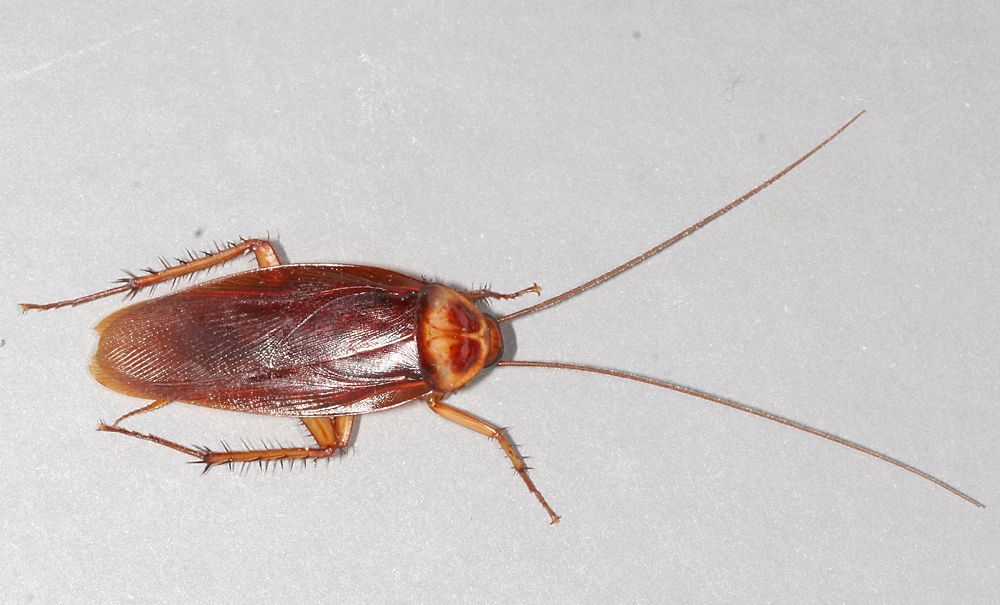
Found one palmetto bug in the house? The quick answer
Probably a stray if:
- You saw one, and it was big
- It showed up after a storm or a few days of rain
- You found it near an exterior door, the garage or a sliding glass door
- It was slow, upside down, or already dead
Worth a closer look if:
- You've seen more than one in the same week
- You're finding them in the same room over and over, often a bathroom
- You see small ones along with the big ones (young roaches mean they're living somewhere close)
- There are droppings or a musty smell in a cabinet, closet or garage corner
- The kitchen lights go on at night and something runs
An upside-down roach on the floor is often near the end of its life. They tend to end up that way when they've dried out or wandered across something they shouldn't have.
Does one palmetto bug mean infestation?
Usually not. The big roaches Floridians call palmetto bugs mostly live outdoors: in mulch, leaf litter, tree holes, palms, storm drains and sewer lines. They come inside by accident or when they're pushed out of where they live. One sighting is like one lizard on the lanai. It got in, and it would rather be outside.
The exception is when the house is giving them a reason to stay. A leak under a sink, a damp crawl space, a garage full of cardboard boxes or a floor drain that's gone dry can let a few settle in close by. Then a "stray" shows up every week, and that's a different story.
Want to be sure what you saw? Our library pages on the palmetto bug and the smokybrown cockroach show the difference, and the cockroach hub covers the rest.
Why palmetto bugs end up in the house after rain
Heavy rain floods the places these roaches hide. Sewer lines and storm drains fill, mulch beds get soaked, and the gaps under pavers turn to mud. The roaches move up and out looking for somewhere dry, and a house is the biggest dry thing around.
That's why calls about palmetto bugs in the house after rain spike after the first big storms of the season and after any tropical system. It's also why people suddenly see several in a few days, then nothing for weeks. The weather drove them, not a nest in your walls.
Where your stray probably came in
Think about where it was, then walk backward:
- Under an exterior door. If you can see daylight under it, a big roach can get through.
- The garage. Garage doors rarely seal tight at the corners, and the door into the house often has a gap.
- Drains. A floor drain in the laundry room, a guest tub or a shower that nobody uses can dry out and open a path from the pipes. More in roaches coming up the drain.
- Weep holes and utility gaps. The small openings at the bottom of brick walls and window frames, and the spots where pipes, cables and the AC line enter the house.
- On something you carried in. Potted plants, boxes from the garage and grocery bags left outside.
Tonight: what to do and what to skip
Do:
- Pick it up with a paper towel and flush it or throw it out in an outside can.
- Run water in any drains you don't use often, so the traps fill back up.
- Look at the door nearest to where you found it. A towel along the bottom works for tonight; a door sweep fixes it.
- Check under the sinks for drips.
Skip:
- Spraying a can of store-bought spray around the baseboards. It doesn't stop the next one from coming in, and it leaves residue where you walk.
- Setting off a bug bomb. It doesn't reach the gaps where roaches enter or hide, and it can push them deeper into the walls.
- Assuming the worst. One is one.
When to call
Call if the quick-answer list above sounds like your house, or if you just want someone to look. We start with a FREE inspection, inside and out. For big outdoor roaches, the outside matters most. Around a house, or a ground-floor condo if the association signs off, that means a treated strip along the foundation and the bottom of the walls, plus spot treatment where roaches get in: under doors, around window frames, at weep holes and where pipes enter. Inside, where it applies, we use crack-and-crevice treatment and bait in the places roaches hide. Keep kids and pets off treated areas until dry, and follow your technician's instructions.
If what you're seeing is small and in the kitchen, that's a different roach with a different plan. Our post on small roaches in the kitchen explains it.
If you'd like someone keeping an eye on the outside all year, the general pest plan runs $125 per quarter, about $42 a month. Plan customers get our Bug Free Guarantee: "If pests come back between visits, so do we, at no extra cost." There are no long-term contracts and no cancellation fees, just a simple service agreement. Monthly and custom schedules are quoted after the inspection. Pro-Spray is family-run and licensed, 30+ years in, and hablamos español. Learn more on our roach control in Fort Lauderdale page or browse our guides.
Palmetto bug FAQs
Should I be worried if I see a palmetto bug in my house?
How long can a palmetto bug live in your house?
Do palmetto bugs lay eggs in your house?
Why are there suddenly so many palmetto bugs in my house?
Seeing more than one? Let's find out where they're coming from.
Get $50 OFF your first service plus a FREE inspection. No code, no expiration. Call or text anytime: 833-845-9284.
Prefer to text or email? Text us · info@prospraypest.com