Pests don't wait. Protect your home today.
Ants Keep Coming Back After Spraying? Why It Happens and What Works
Family-run, licensed and insured pest control in South Florida.
$50 OFF your first service + FREE inspectionNew customers · No code needed · No expirationIf ants keep coming back after spraying, the spray probably did exactly what it was made to do: it killed the ants you could see. The nest wasn't on the counter. It's in the wall, under the backsplash, behind the dishwasher or outside in the mulch by the foundation. In South Florida kitchens, the tiny pale ants that do this are usually ghost ants, and they live in lots of small connected nests instead of one big one. Spray a trail and the colony can split up and show up in the bathroom a week later. Slow-acting bait that the workers carry home is what usually gets it under control.
Why ants keep coming back after spraying
Picture the trail you sprayed. Those ants are foragers, the delivery drivers of the colony. Most of the colony, including the queens and the young, never leaves the nest. When you kill the foragers, the nest just sends out more. By the next morning you've got a fresh line of ants on the same counter, or a new one somewhere else.
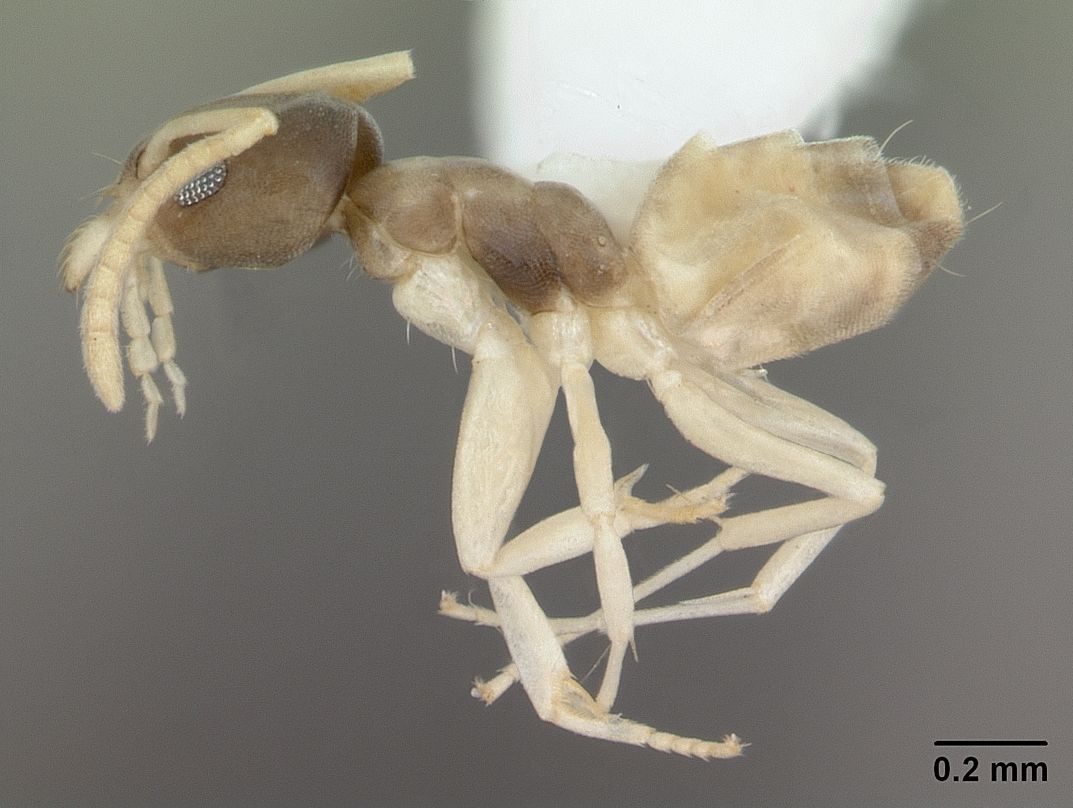
Ghost ants make this worse. They're tiny, with a dark head and an almost see-through body, and a colony isn't tied to one spot. It's spread across several small nests, often in wall voids and along the same hidden paths that plumbing and wiring follow. When one of those nests gets disturbed, the ants can move out and set up somewhere new. That's why people tell us "they were in the kitchen, I sprayed, and now they're in the guest bath." Our ghost ants page covers how to recognize them.
The other small trail ant that turns up in South Florida homes is the white-footed ant, and it behaves in a similar way. The ant types hub has the rest.
Does spraying ants make them spread?
It can. Not every spray causes it, and not every ant species reacts the same way, but with the kinds of ants that keep multiple nests, a repellent spray is one of the things that can push a colony to bud off into new nests. You end up with the same ants in more places.
Repellent sprays also do something that's easy to miss: the ants learn to avoid the treated strip. They don't stop coming in. They take a different route.
Three things to stop doing
- Stop spraying the trails. Every round kills a few foragers and teaches the rest to go around.
- Don't scrub the trail away right before we come. Clean up food and crumbs, but leave the trail itself for a day if you can, or take a quick phone photo of where it starts and where it disappears. That tells us where to look.
- Don't put out a mix of products. Spray next to bait ruins the bait. The ants that would have carried it home die or avoid it.
Bait-first: what the first week looks like
Bait works the opposite way from spray. It's slow on purpose. A worker finds it, eats some, carries some back and shares it with the nest. If it killed her on the spot, she'd never make it home.
So here's what's normal after a bait-first treatment:
- For the first few days you may see more ants, not fewer, and many of them will be on or near the bait. That's the colony finding it. Leave them alone.
- Activity usually drops over a few weeks as the bait works its way through the nests. There's no honest fixed number of days. A bigger or more spread-out colony takes longer.
- If a new trail shows up in another room, tell us where. It often means there's a nest we haven't reached yet.
Where the nest probably is
Watch where the trail goes, not where it is. In South Florida kitchens, trails usually vanish into one of these:
- the gap under the backsplash or along the top of the counter
- the space behind the dishwasher or under the sink where the pipes come in
- a loose baseboard or the edge of the cabinets
- an outlet or switch plate on an outside wall
- the threshold of a sliding door, where they come in from the patio
Outside, look along the foundation, under potted plants that sit right against the house, and in the mulch bed next to the wall. Ants like moisture, so a leaky hose bib or a sprinkler head that keeps the wall wet is worth a look too.
What happens when we come out
We start with an inspection: where the trails go, which ant it is, and what's drawing them in. Inside, we place slow-acting baits along the trails so the workers carry them back to the nests. Outside, we use a treatment around the foundation and the perimeter of the home. We also point out moisture problems, like a slow drip under the sink, that keep pulling them back. Keep kids and pets off treated areas until dry, and follow your technician's instructions.
Our pest control page explains the rest of the service, and if you're in Broward, our Fort Lauderdale ant control page is an example of what we do city by city.
Ants are part of our general pest plan: $125 per quarter, about $42 a month, with monthly or custom schedules quoted after the inspection. For plan customers: "If pests come back between visits, so do we, at no extra cost." There are no long-term contracts and no cancellation fees, just a simple service agreement. We're family-run and licensed, with 30+ years in the business, and hablamos español. See plans and pricing or read more guides.
Questions people ask about ants that won't quit
Will ants go away if I keep killing them?
How long until the ants go away after a treatment?
What kills tiny kitchen ants for good?
Why did ants show up after pest control?
Tired of chasing the same ant trail?
Get $50 OFF your first service plus a FREE inspection. No code, no expiration. Call or text anytime: 833-845-9284.
Prefer to text or email? Text us · info@prospraypest.com